10 Unforgettable Things to Do in Luxor (2026 Guide)

10 Unforgettable Things to Do in Luxor (2026 Guide)

Luxor is one of the most famous tourist destinations in Egypt and is often described as the world’s greatest open-air museum. Located on the banks of the Nile River, Luxor is home to some of the most impressive ancient temples, royal tombs, and historical landmarks in the world. Whether you are planning Luxor vacation packages, booking day tours, or arranging a private transfer from Luxor, this complete guide will help you discover the best things to do in Luxor while optimizing your travel experience.
If you are looking for a trusted Luxor travel company to organize your tours, transfers, and Nile River cruise, choosing a professional team makes your trip smooth, safe, and unforgettable.

1. Explore Karnak Temple – The Largest Religious Complex in Egypt

Karnak Temple is one of the top attractions in Luxor and a must-visit for anyone interested in ancient Egyptian history. This massive temple complex features giant columns, obelisks, and sacred lakes. The Great Hypostyle Hall with its 134 massive columns is one of the most photographed places in Egypt.
Most Luxor vacation packages include Karnak Temple as a key stop, usually combined with Luxor Temple in a half-day or full-day East Bank tour.

2. Visit Luxor Temple – The Heart of the City

Located in the center of Luxor city, Luxor Temple is especially beautiful at night when illuminated. It is easily accessible by Luxor cab or Luxor taxi service from any hotel on the East Bank.
Booking a professional Luxor private driver ensures you avoid price negotiations and enjoy comfortable, air-conditioned transportation between sites.

3. Discover the Valley of the Kings – Royal Tombs of the Pharaohs

On the West Bank of Luxor, the Valley of the Kings is one of the most visited archaeological sites in Egypt. It contains more than 60 royal tombs, including the tomb of Tutankhamun.
Because the West Bank sites are spread out, hiring a Luxor private driver for the day is highly recommended. It allows you to move easily between the Valley of the Kings, the Temple of Hatshepsut, and the Colossi of Memnon without stress.
10 Unforgettable Things to Do in Luxor (2026 Guide)
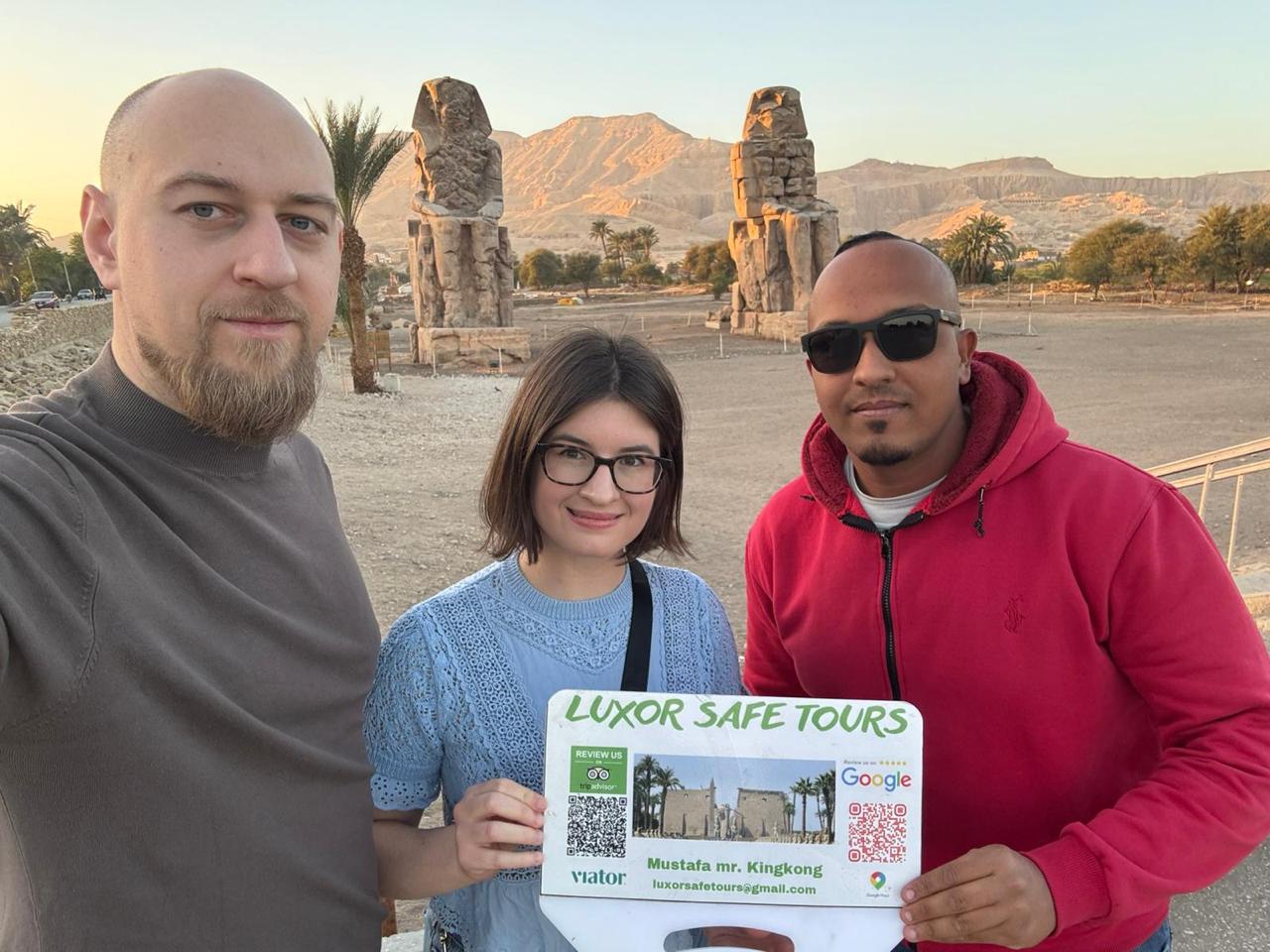
Colossi of Memnon

4. Temple of Hatshepsut and Colossi of Memnon

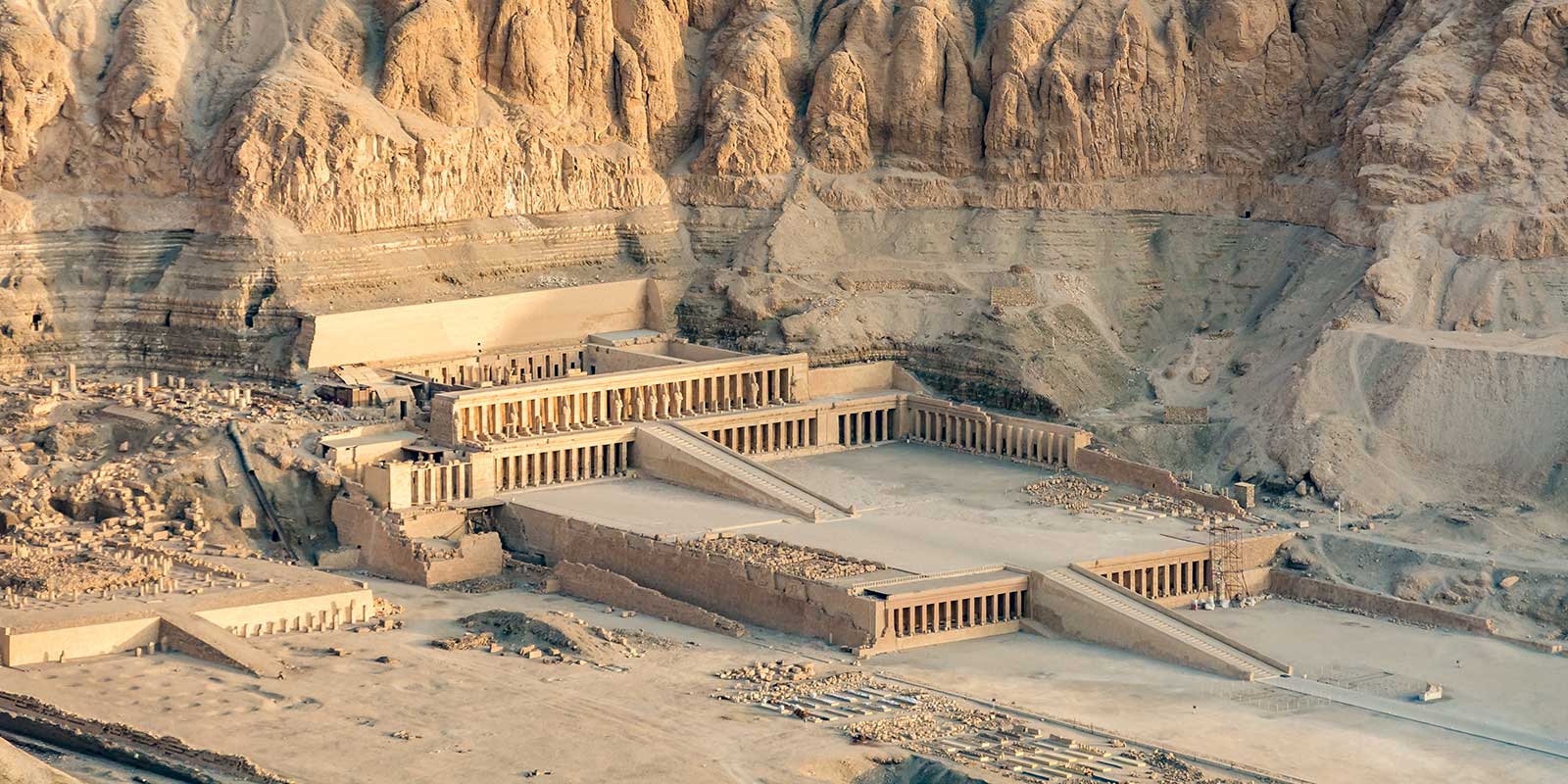
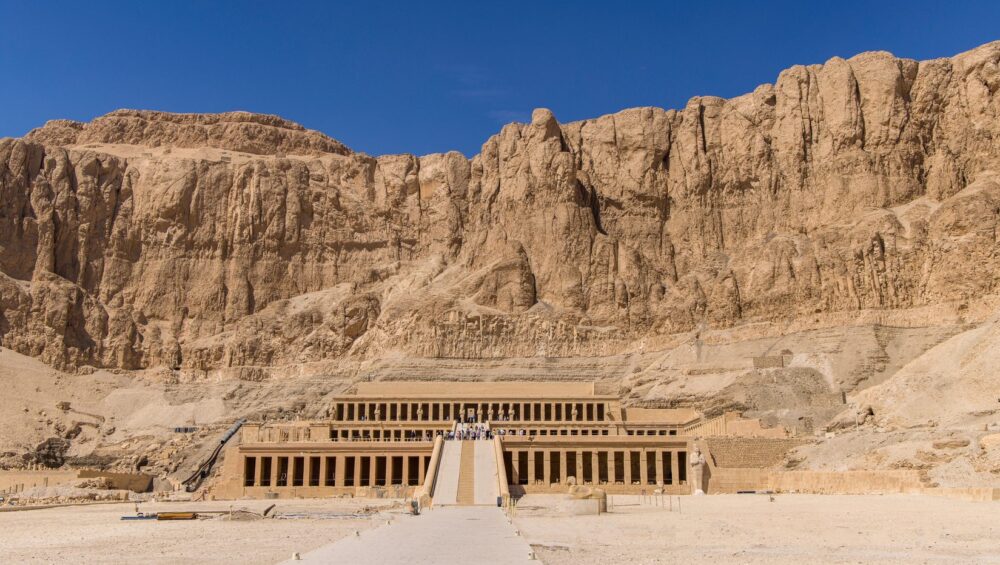
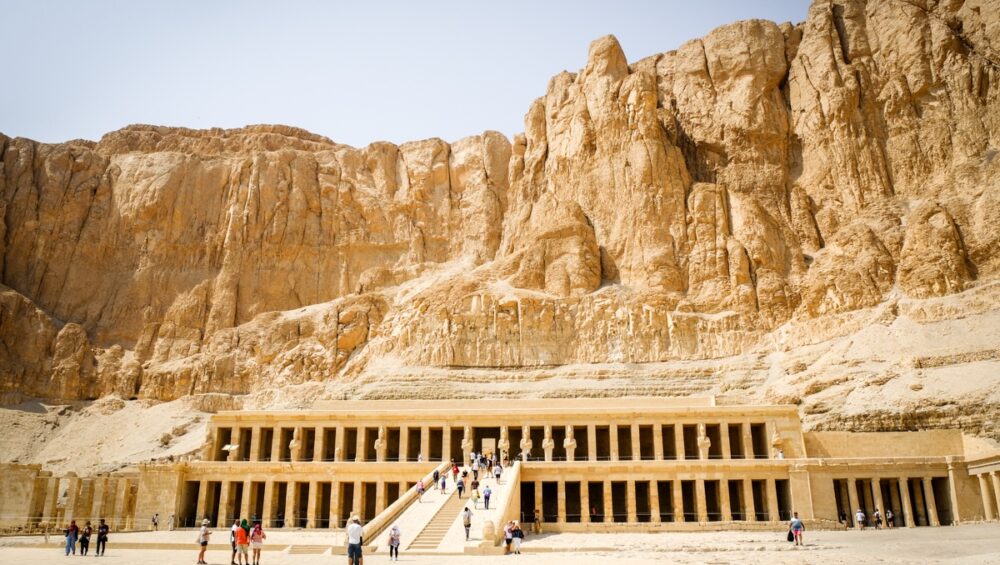
The Temple of Queen Hatshepsut is one of the most unique temples in Egypt, built directly into limestone cliffs. Nearby, the Colossi of Memnon stand as two massive statues guarding the ancient necropolis.
These monuments are included in most Luxor vacation packages and private day tours.

5. Hot Air Balloon Ride Over Luxor

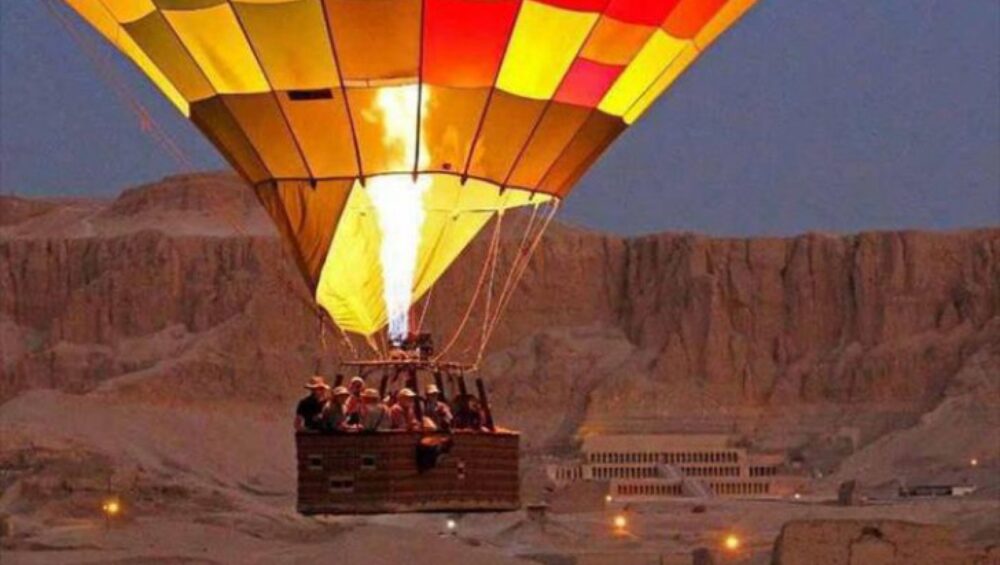
A sunrise hot air balloon ride over Luxor is one of the most unforgettable experiences in Egypt. From above, you can see the Nile River, green farmlands, and ancient temples stretching across the desert landscape.
Most Luxor travel company packages offer early morning pickup from your hotel with a professional transfer service.

6. Nile River Cruise from Luxor to Aswan

A Nile River cruise from Luxor to Aswan is considered the highlight of many Egypt holidays packages. This 4-day or 5-day journey allows travelers to visit Edfu Temple, Kom Ombo Temple, and enjoy luxury accommodation onboard.
A reliable Luxor taxi service or private transfer from Luxor Airport or railway station ensures smooth embarkation on your cruise ship.
Many Luxor vacation packages combine cultural tours with a Nile River cruise for a complete Upper Egypt experience.

7. Felucca Ride on the Nile River

For a more traditional experience, a felucca ride on the Nile River at sunset offers peaceful scenery and authentic Egyptian atmosphere. It is perfect for couples and families looking for relaxing moments after a busy sightseeing day.

luxor safe tours - Best tours in Luxor
Luxor to Marsa Alam Transfer

8. Luxor to Marsa Alam Transfer – From History to the Red Sea

After exploring Luxor’s temples and tombs, many travelers continue to the Red Sea. A Luxor to Marsa Alam transfer is one of the most searched transportation services for visitors who want to combine culture with beach relaxation.
This private transfer from Luxor takes approximately 5 hours in a modern air-conditioned vehicle, offering comfort and safety.

Luxor to Hurghada Transfer

9. Luxor to Hurghada and Aswan Transfers

In addition to Marsa Alam, many travelers book:

Choosing a professional Luxor travel company guarantees licensed drivers, fixed pricing, and 24/7 availability.

10. Why Book with a Professional Luxor Travel Company?

Booking with a trusted local expert like luxor safe tours guarantees a smooth, safe, and unforgettable travel experience in Upper Egypt.

When you choose an experienced Luxor travel company, you benefit from:

    • Tailor-made Luxor vacation packages designed around your interests and budget

    • Expert Egyptologists and professional tour guides

    • Competitive prices with the best value for money

    • High-quality service standards and 24/7 customer support

    • Reliable Luxor taxi service and comfortable private drivers

    • Safe private transfers from Luxor to Marsa Alam, Hurghada, Aswan, and other destinations in Egypt

    • Seamless organization of Nile River cruises and full Egypt holiday packages

With deep experience in Egyptian tourism, Luxor Safe Tours combines guided tours, premium transportation, and carefully planned itineraries to deliver unforgettable journeys for both first-time visitors and returning travelers.


Final Thoughts

Luxor is more than a historical city — it is the living heart of ancient Egypt. From the majestic Karnak Temple and the legendary Valley of the Kings to a relaxing Nile River cruise and comfortable private transfers from Luxor to the Red Sea, the city offers a complete and immersive travel experience.

Whether you are booking Luxor vacation packages, looking for a dependable Luxor taxi service, or arranging a Luxor to Marsa Alam transfer, planning your trip with luxor safe tours ensures comfort, safety, and unforgettable memories in Luxor and beyond.
 

Travel Guide: FAQ About Luxor

+

What is the best month to visit Luxor, Egypt?

The best months to visit Luxor are from October to April, when temperatures are cooler and perfect for sightseeing. January and February are especially popular due to mild weather and comfortable daytime tours.

+

Things to do in Luxor other than temples?

Besides exploring ancient temples, visitors can enjoy a sunrise hot air balloon ride, take a Nile felucca boat trip, visit local markets, explore Nubian villages, enjoy traditional Egyptian cuisine, or relax in a riverside café overlooking the Nile.

+

Is it safe to walk around Luxor at night?

Yes, Luxor is generally safe for tourists, especially in well-known areas such as the Corniche and around major hotels. However, like any destination, it’s best to stay in lit areas and avoid isolated streets late at night.

+

How many days are enough for Luxor?

Most travelers need 2 to 3 days to explore Luxor properly. This allows enough time to visit the West Bank sites like the Valley of the Kings and the Mortuary Temple of Hatshepsut, as well as the East Bank temples.

Who Is Queen Hatshepsut?

Queen Hatshepsut: The Most Powerful Female Pharaoh of Ancient Egypt

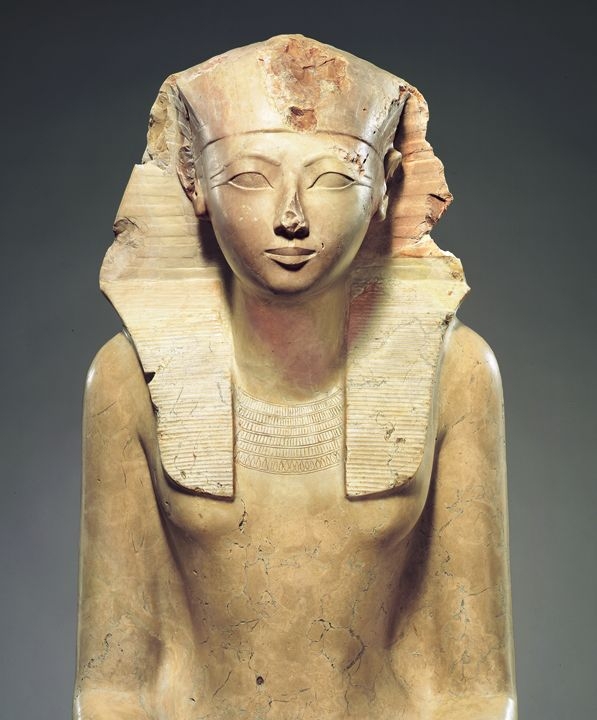
Queen Hatshepsut
Queen Hatshepsut

Who Was Queen Hatshepsut?

Hatshepsut was one of the most powerful and successful rulers of Ancient Egypt. She reigned during the 18th Dynasty (around 1479–1458 BC) and became one of the very few women in Egyptian history to rule as Pharaoh.

Unlike other royal women who ruled as regents, Hatshepsut declared herself full Pharaoh of Egypt, adopting royal titles and even traditional pharaonic imagery to legitimize her authority.

Her reign marked a period of stability, economic prosperity, and monumental architectural achievements — especially in Luxor.


Early Life & Rise to Power

Hatshepsut was the daughter of Pharaoh Thutmose I and became the wife of her half-brother Thutmose II. After his death, the throne technically passed to Thutmose III, who was still a child.

Initially acting as regent, Hatshepsut gradually consolidated power and declared herself Pharaoh. She presented her rule as divinely ordained, claiming direct descent from the god Amun to strengthen her legitimacy.

This political intelligence helped her rule Egypt peacefully for over 20 years.


Major Achievements of Queen Hatshepsut

1. Economic Expansion & Trade

One of her greatest achievements was reopening trade routes, especially the famous expedition to the Land of Punt. This brought:

  • Gold
  • Myrrh trees
  • Ebony
  • Exotic goods

Egypt flourished economically during her reign.


2. Monumental Architecture in Luxor

Hatshepsut invested heavily in temple construction and restoration projects across Egypt — especially in:

  • Temple of Karnak
  • Mortuary Temple of Hatshepsut

Her mortuary temple at Deir el-Bahari remains one of the most impressive monuments in Luxor today. Built against dramatic limestone cliffs, it reflects both architectural genius and political symbolism.


The Mortuary Temple of Hatshepsut

The Mortuary Temple of Hatshepsut (Deir el-Bahari)

Located on the West Bank of Luxor, the temple is considered one of the masterpieces of Ancient Egyptian architecture.

Why It’s Unique:

  • Terraced design integrated into the cliff
  • Colonnaded halls
  • Relief scenes showing the Expedition to Punt
  • Divine birth inscriptions legitimizing her rule

Today, the temple is one of the top attractions included in most West Bank tours.


Why Was Hatshepsut Erased from History?

After her death, many of her statues and images were destroyed or defaced — likely during the reign of Thutmose III.

Historians believe this may have been an attempt to restore traditional male kingship and remove the precedent of female rule.

Despite this, modern archaeology restored her legacy as one of Egypt’s greatest rulers.


Queen Hatshepsut’s Legacy

Hatshepsut’s reign is remembered as:

  • A time of peace, stability, and remarkable prosperity across Egypt

  • A golden age of monumental construction and architectural innovation

  • A powerful example of visionary female leadership in the ancient world

Her magnificent temple in Luxor continues to attract thousands of curious and inspired visitors each year.


Visiting Queen Hatshepsut’s Temple in Luxor

If you’re planning a trip to Luxor, the Mortuary Temple of Hatshepsut is a must-see highlight of the West Bank.

At Luxor Safe Tours, we provide:

  • Private West Bank guided tours
  • Comfortable air-conditioned transfers
  • Expert Egyptologist guides
  • Customizable itineraries

You can combine your visit to Hatshepsut’s Temple with:

  • Valley of the Kings
  • Colossi of Memnon
  • Temple of Habu

Book your Luxor experience today and explore the legacy of Egypt’s most extraordinary female Pharaoh.

FAQ About Queen Hatshepsut

+

Was Hatshepsut the first female Pharaoh?

She was not the first royal woman in power, but she was one of the first to rule officially as Pharaoh with full kingly titles.

+

How long did Hatshepsut rule?

Approximately 20 years (1479–1458 BC).

+

Where is Hatshepsut’s temple located?

On the West Bank of Luxor, at Deir el-Bahari.

Ancient Egyptian Language

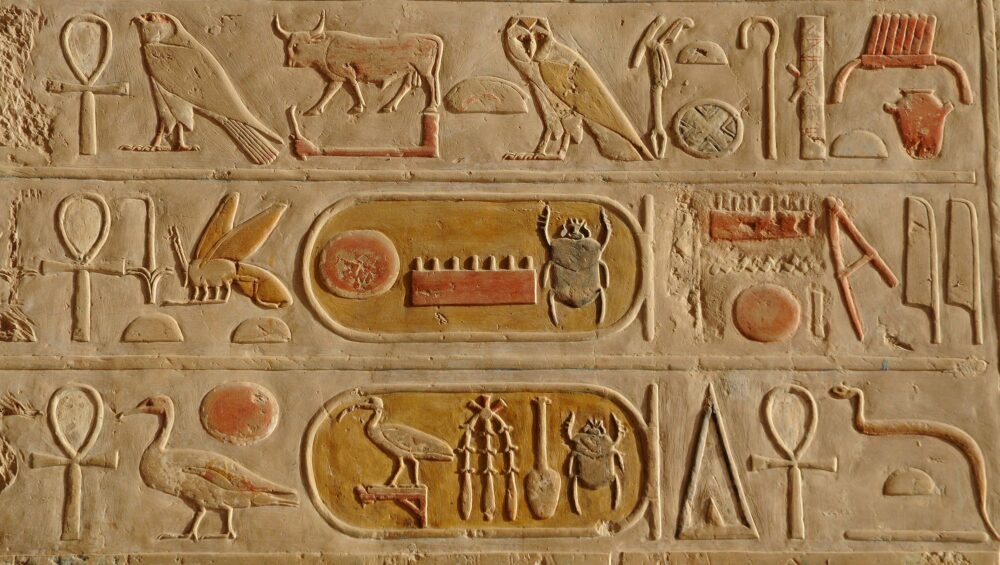
The Ancient Egyptian Language, a branch of the Afro-Asiatic language family, connects Berber and other Semitic languages such as Arabic, Amharic, and Hebrew. As the oldest known language, it stands alongside Sumerian as one of the earliest recorded languages. Originating around 3400 BC during the reign of the Ancient Egyptian Kingdom, it underwent several transformations over the centuries. Initially, it appeared in a demotic form around 1000 BC and later, from the Middle Ages to the 17th century, in the Coptic form. Hieroglyphs, a prominent writing system in temples and tombs, were integral to its usage. Following the 7th-century Muslim invasion, Egyptian Arabic replaced it as the national language.

The language’s history in ancient Egypt is categorized into six distinct periods:

Archaic Egyptian (Before 2600 BC): This early form, seen in the dynastic era, features some of the earliest Egyptian hieroglyphs, including those on Nakada II pottery.

Old Egyptian (2600 – 2000 BC):

This language produced extensive Pyramid Texts and autobiographical writings during the Old Kingdom and the First Intermediate Period. Characterized by triple ideographic, phonetic, and plural determinants, it formed the foundation for later linguistic developments.

Middle Egyptian (2000-1300 BC):

Known as Classical Egyptian, it was employed for hieroglyphic and hieratic scripts, encompassing various texts like the Coffin Text and the Wisdom Text. Its widespread use reflected in regional accents, and its grammar mirrored that of Old Kingdom languages.

Late Egyptian (1300-700 BC):

Emerging in the New Kingdom, this period included diverse religious and secular texts. Its linguistic structure differed significantly from earlier forms and expanded the hieroglyphic script.

Demotic (600 BC – 400 AD):

A vernacular form used during the late Ptolemaic dynasty, Demotic evolved from the Hieratic script used in the northern Delta region.

Coptic Language:

Representing the final stage of ancient Egyptian language evolution, Coptic was primarily written in an adapted Greek alphabet. It became the official language from 200 AD to 1100 AD and was last spoken in the 17th century. Preserved by European scholars during the Renaissance, it continues as a liturgical language in the Coptic Orthodox Church.

Egypt Balloon Ride

Egypt Balloon Ride is one of the most amazing tourist activities in Luxor, in that blog you will find answers to a lot questions you may ask about Hot Air Balloon.

 What is Balloon over Luxor company?

Balloon over Luxor company is have twenty-five years’ experience of offering passengers the most awesome, health and safety checked and entertaining hot air ballooning activities in Egypt. Balloon over luxor’s objective is to present a unique leisure experience, safely and consistently. Travelers from all over the world have gained from their expertise by enjoying Luxor’s history and beauty from a bird’s-eye perspective of a hot air balloon.

How can you book Egypt Balloon Ride in Luxor?

you can go to one of our categories Hot Air Balloon and choose between two Luxor Balloon flights, Deluxe flight and standard flight.

How can you Pay for Egypt Balloon Ride?

Balloon over Luxor accept cash and by Credit Card, also you can pay on Egyptian pound, Euros, Sterling pound, & US Dollars.

When Egypt Balloon Ride cancelled?

Egypt Balloon Ride can be cancelled due to the weather situation, if it clears you can do your Hot Air Balloon flight, if the weather is bad, it will be cancelled.

What if you paid and Egypt Balloon Ride is cancelled?

if your Hot Air Balloon cancelled due to bad weather or you want to cancel it 24 hours before the flight, you will fully refund, but if you not Shown or cancelled it before it directly, you will noy refunded.

Great Sphinx in Giza

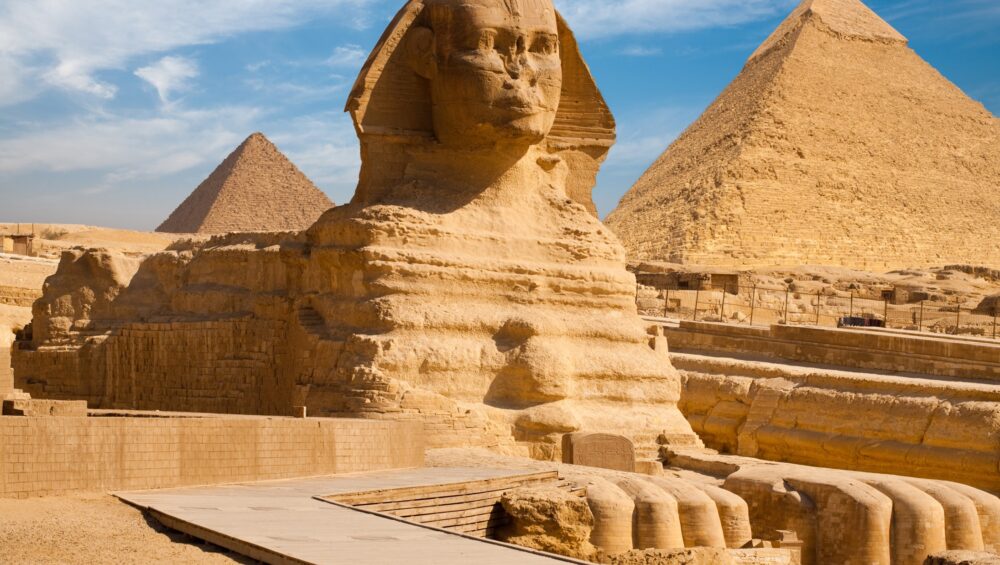
Pharaonic Relics from Egypt As the Great Sphinx, which was erected by the ancient Egyptians to serve as a protector and overseer of the pleated Giza, is the focus of numerous myths and legends, it is crucial to your 2020 Egypt & Nile cruise adventure. Some of the most asked concerns are the meaning of the Sphinx, what it represents, and how the Great Sphinx was constructed.

Sphinx: What does that mean?

The term “sphinx” is not just associated with the ancient Egyptians; it was also used to describe creatures that looked similar in Greece and South and Southeast Asia. These creatures had the winged body of a lion and the head of a human. It is quite impossible to ascertain the ruins’ original name. This is mostly due to the fact that it is absent from all Old Kingdom inscriptions. Nearly 2000 years after the agreed-upon construction date and the rules of classical antiquity, the Sphinx received its current name. The name is derived from a beast from Greek mythology that had an eagle’s wings, a woman’s head, and a lion’s body. The head of a man is used in place of wings in the ancient Egyptian form. The enormous Sphinx As the Greek sphinx strangles anyone who cannot solve a riddle, the English word for comes from Greek and means “strangle.” The Arabic moniker “Abu al-Haul,” which translates to “the awful one,” is another well-known one.

Egypt tours

How was the Big Sphinx constructed?

20 metres from the bottom of its skull to the top of its head and 19 metres across the back of its hips make up the sphinx’s enormous height. The building is thought to have been constructed during the time of Pharaoh Khafre in the Old Kingdom. The Giza Plateau, which also included the Pyramids of Giza and was used as a quarry, is where the Sphinx was cut into the bedrock. The body of the modern Sphinx was progressively constructed from layers of monetary limestone, each with a varied resistance to weathering. This enormous building measures 73 metres (240 feet) from head to tail, 20 metres (66 feet) high from base to crown, and 19 metres (62 feet) wide at the end.

Regarding who built this historic wonder of the world, there are numerous theories and hypotheses. Everyone does, however, concur that the Great Sphinx was constructed circa 2500 BC. for Pharaoh Kefre, built. The aforementioned Sphinx-Kefle relationship has some supporting evidence. The design resemblance to the Valley Temple and the upside-down figure of Khefre, among other pieces of nearby evidence, are proof of this.


The Giza Necropolis was abandoned and neglected at some unknown time, and the Sphinx was eventually buried head-to-head in the sand. This persisted until Thutmose IV’s earliest recorded excavations, which took place around 1400 BC. The Dream Stele, a granite block, was placed between his two front legs after much digging was required to free them. Ramesses carried out another another excavation, followed by a second excavation, and by the beginning of 1887 the chest, feet, altar, and the entire Giza Plateau had been dug and were all visible.

An engineer employed by the Egyptian government made the last repairs to the Great Sphinx in 1931. The neck had been considerably eroded, and a portion of the headpiece was broken. The bear and the nose are two further components of the Sphinx that are missing. The removal of the sphinx’s nose was thought to have been caused by a cannon shot by Napoleon Bonaparte’s troops. Al-Makrizi, an Arab historian, believes that Mohammed Salim al-Dar had the nose cut off because he regarded it as an act of iconoclasm.

Regarding who built this historic wonder of the world, there are numerous theories and hypotheses. All believe, however, that the Great Sphinx was constructed approximately 2500 BC. for Pharaoh Kefre, built. The relationship between Kefre and the Sphinx, which was previously mentioned, is supported by certain evidence. The design resemblance to the Valley Temple and the upside-down figure of Khefre, among other pieces of nearby evidence, are proof of this.

How can you Visit the Sphinx?

You can visit the Great Sphinx in Giza, during your tour in Cairo, Also you can visit if you are in Luxor by an over day to Cairo with flight, for example, you can do your Hot Air Balloon flight with Balloon over Luxor company, then go to Luxor Airport to fly to Cairo, so you can visit the Great Sphinx in Giza, Pyramids in Giza and Egyptian Museum, Later back again to Cairo Airport to fly back to Luxor.

Giza city in Egypt

The Giza Prefecture’s capital is Giza City. It was formally established in the fourth century BC. In Egyptian history, it was possibly a small village from a long time ago. On the west bank of the Nile, it was situated in the middle of the path connecting Heliopolis and Memphis. The city south of modern-day Giza was the renowned capital known as “Memphis.” Throughout ancient Egyptian history, Memphis was a significant commercial and cultural hub. Memphis experienced a significant decline in importance as Christianity expanded throughout Egypt.

Memphis was abandoned after the Muslim conquest, while Giza was esteemed more. Amr Ibn Al-As, the leader of the Arab conquest army, gave the order to fortify it adequately. Great mosques were constructed in Giza, but sadly none of them are still standing. There is still a sizable quantity of greenery and agricultural activity in this area, which is primarily farmland. It has also experienced floods from the Nile throughout its history, particularly in the lowlands. For many years, Giza was just a tiny town encircled by modest farming and fishing settlements and rural villages.

Egypt tours

Memphis was left behind after the Muslim conquest, but Giza was more highly valued. Amr Ibn Al-As, the Arab conquest army’s commander, gave the order to fortify it well. In Giza, magnificent mosques were constructed, but sadly none of them are still standing. Despite the fact that a large portion of this region is farmland, there is still a sizable amount of vegetation and agricultural activity. Additionally, particularly in the lowlands, it has experienced Nile flooding throughout its history. Giza was just a tiny town for many years, surrounded by small farming and fishing communities and rural villages.

Giza in the Contemporary Era

The Suez Canal was officially opened in 1869 in front of the Egyptian governor Ismael Basha, as well as notable dignitaries from throughout the world, including kings, princes, princesses, counts, and ministers. and most importantly, French Empress Eugénie, the third French Emperor’s wife. In order to facilitate transit and visitation, a significant program of public works was planned, implemented, and involved building, reconstruction, decoration, and maintenance. This is how “Pyramid Avenue” projected in Giza, a place of renowned visitors, notably historical landmarks.

New neighborhoods with schools, hotels, restaurants, banks, and other businesses popped up. Beginning in the early 20th century, Cairo University’s grandiose vision took shape. a plot of land close to the Nile’s west bank. The government also decided to be New Cairo University. However, it actually and physically belongs to the nation of the city of Giza. In addition to Egypt, the Arab region and Africa also have this university as their parent institution.

Following that, numerous embassies were constructed in the city, particularly in the El Duqqi neighborhood and the city center. The city of Giza is currently a part of Greater Cairo for geographical and demographic reasons, although historically they were two different provinces with their sovereign mayors and councils:
Greater Cairo included the entirety of Cairo, the majority of Giza, and a portion of the Al-Qalyubia Province, which is located to the north of modern-day Cairo. Around 20 million people are living in this area.

Diversity of Giza monuments

The majority of the structures at Giza date to ancient Egypt. Contrary to Cairo, which possesses the majority of Muslim and Christian Coptic monuments on Egyptian soil, old Muslim and Christian monuments are uncommon in the city. There are not many historical sites from ancient Egypt.

Sakkara, the expansive necropolis of the great ancient capital of Memphis, which contains a variety of monuments ranging from the pyramids above the stepped pyramid of King Zoser, and a large number of mastabas, the decorated tombs of ancient nobles with themes depicting wonderful scenes from daily life in ancient Egypt, are actually some of the most significant historical sites in Giza. Large underground chambers known as serapiums are where sacred bulls (Apis) are interred in enormous stone sarcophagi. Memphis’ ancient capital’s ruins can be found at Giza as well. Other significant historical sites in the area include Dahshour, Abu Sir, Atfih, and Abu Rawash; however, Bahareya is located 380 kilometres from the Giza border in the western desert. The Giza plateau, home to the enormous pyramids of Cheops, Chefren, and Menqueos, as well as the Sphinx, is the most significant location.

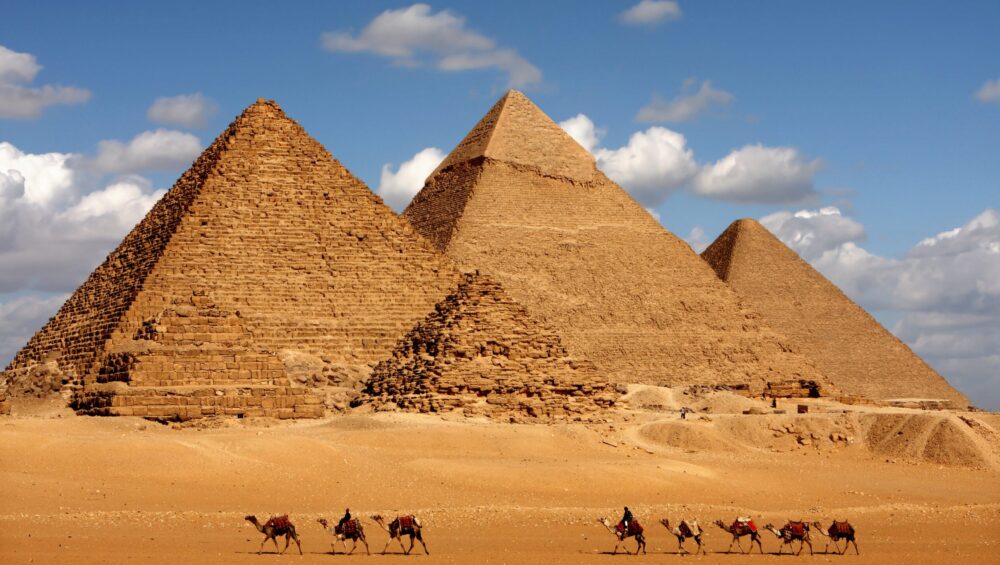
Egyptian pyramids

The Egyptian pyramids, particularly the Great Pyramid of Giza, are among the most magnificent man-made monuments in history. They were constructed when Egypt was one of the world’s richest and most powerful civilizations. Its great size is a reflection of the special position that kings and pharaohs had in predynastic Egyptian society.

The construction of the pyramids peaked towards the end of the 3rd Dynasty and continued until the 4th century AD, while they were constructed from the beginning of the Old Kingdom until the end of the Ptolemaic dynasty (circa 2325 BC). The Egyptian pyramids, which date back more than 4,000 years, are still majestic and provide a window into the nation’s illustrious past.

The Pharaoh in Society of Egypt

The Old Kingdom’s Third and Fourth Dynasties saw Egypt reach new heights of affluence and stability in the economy. Kings held a distinct position in Egyptian society. They are believed to have been chosen by the gods themselves to serve as a sort of middleman between mortals and the gods on earth. It is in everyone’s best interest to keep the king in check. Horus, the falcon god who had previously served as Ra’s guardian, succeeded Ra as ruler.

Under the Third and Fourth Kingdoms of the Old Kingdom, Egypt experienced economic stability and prosperity. The position of king was one of great honour in ancient Egypt. They would be selected by the gods themselves to serve as a sort of middleman between people and the gods on earth. It is in everyone’s best interest to preserve the king’s honour. The new pharaoh was then succeeded by the falcon deity Horus, who is also Ra’s defender.

Djoser Pyramid:

During the early dynastic period (2950 BC), the royal tombs were carved out of rock and covered with flat-roofed rectangular structures known as “mastabas,” which were the forerunners of the pyramids. The first pyramids of Egypt were built in 2630 BC. At Saqqara, a monument honouring King Djoser of the Third Dynasty. Initially a standard mastaba, this pyramid, also known as the “stepped pyramid,” later changed into something more substantial.

Tradition has it that Imhotep, a priest and healer who is honoured as the patron saint of healers, designed the pyramid about 1,400 years later. King Djoser built six stone floors of the pyramid using the Object() [native code] function throughout the course of his 20-year rule (as opposed to burnt bricks like most early tombs). It was the highest building at the time. The complex of courtyards, temples, and shrines that surrounds the stepped pyramid is where Djoser can enjoy the afterlife.

Even though no graves that the dynasty’s successors had planned were carried out (perhaps as a result of King Djoser’s reign), the stepped pyramid was utilized as the norm for royal burials after King Djoser. theirs is rather brief). One of the three tombs at Dashur, the Red Pyramid, was constructed for Sneferu (2613–2589 BC), the first monarch of the 4th Dynasty and the oldest tomb ever constructed in the “actual” world (smooth, non-stepped pyramid). The name of the structure was motivated by the hue of the limestone blocks used to construct the pyramid’s core.

The Great Pyramids of Giza:

The Great Pyramid of Giza, located outside present-day Cairo in the highlands of the West Nile, is the most famous of all pyramids. The only surviving example of the famous seven wonders of the ancient world is the oldest and largest of its three pyramids at Giza, known as the Great Pyramid. It was built for Pharaoh (Greek: Cheops), the second of the eight kings of Pharaoh’s Fourth Dynasty and the successor of Sneferu.

The Pyramid of King Khufu (Cheops):

Little is known about Cheops’ 23-year rule other from the beauty of the pyramids (2589-2566 BC). The pyramid was the tallest in the world at 481.4 feet (147 metres) high and had an average base length of 755.75 feet (230 metres). Next to the Great Pyramid, where her mother, Queen Hetepheres, discovered the empty sarcophagus, are its three lesser pyramids, built for Queen Cheops wifes. Rows of mastaba, which are tombs for the king’s family and the officials who assisted and accompanied him in the afterlife, encircle Cheops’ pyramid.

The Pyramid of King Khafre:

The Central Pyramid of Giza was constructed for Pharaoh Khafre, the son of Khufu (2558-2532 BC). The tomb of Pharaoh Khafre is located inside the Pyramid of Khafre, the second-tallest pyramid at Giza. The Great Sphinx, a limestone guardian monument with a human head and a lion’s body, is a distinctive element incorporated into the Khafre pyramid complex. It was the largest statue in all of antiquity with a length of 240 feet and a height of 66 feeta length of 240 feet and a height of 66 feet, it was the largest statue in all of antiquity. The Great Sphinx itself would be adored throughout the Eighteenth Dynasty (around 1500 BC AD), as a representation of a regional form of Horus. Menkaure, the son of Khafre, had the southernmost pyramid at Giza constructed for him (2532-2503 BC). The shortest of the three pyramids (218 feet tall)it served as a forerunner to the smaller pyramids that would be built during the Fifth and Sixth Dynasty.

Who Built The Pyramids Workmen or Salves?

Contrary to certain popular versions of the narrative that claim slaves or foreigners were employed to build the structures, human bones found nearby imply that employees were made to work when the Nile flooded. create pyramids. This indicates that they are probably Egyptian seasonal farmers. terrain close to the pyramids. More than 2.3 million stone blocks weighing an average of 2.5 tonnes each were cut, transported, and put together to create the Pyramid of Khufu. However, later archaeological investigation suggested that the real number of employees may have been closer to 20,000. Herodotus, an ancient Greek historian, claimed that it took 20 years and 100,000 labourers to complete.

from pyramid to Luxor:

you can have an over night from Cairo to Luxor, so you reach Luxor at sunset or at night, then overnight in the hotel and at early morning you can do a hot air balloon flight with Balloon Over Luxor company, then back to your hotel to have breakfast and check out.

your tour will start with visiting valley of the kings, temple of queen Hatshepsut, colossi of Memnon, then have lunch at local restaurant, later visit karnak temple & Luxor temple then go to Airport to fly back to Cairo.

Who is King Ramses II?

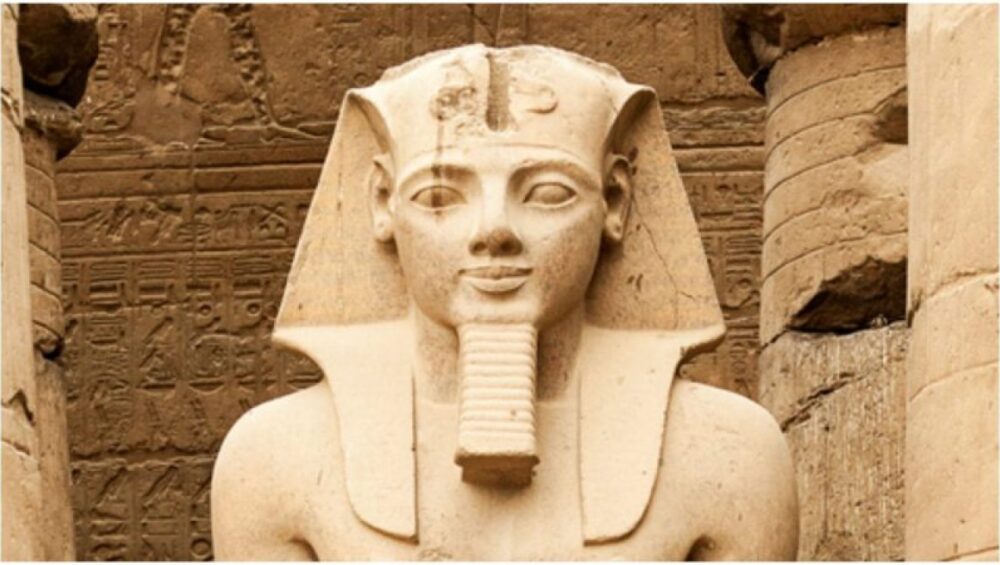
Ramesses II was one of the most well-known Egyptian rulers to reign during Egypt’s golden age. He was Egypt’s 19th dynasty’s third-most powerful pharaoh. Prince Ramses was crowned by King Seti I, and he was succeeded by Ramses II. “Prince of Egypt” Ramses was given a house and a harem, and before becoming king, he served alongside his father in military operations where he earned valuable military and regal experience.

Ramses II, who is he?

One of Egypt’s most powerful and well-respected pharaohs during its golden age was Ramesses II. He was Egypt’s 19th Dynasty’s third-most powerful pharaoh. Prince Ramses was crowned by King Seti I, and he was succeeded by Ramses II.
He has conducted a number of trips and is committed to achieving his objectives. He was given the moniker “sovereign of rulers” for this, which mirrored his vision of a powerful country. Because of this, history buffs refer to him as “Ramesses the Great.” Moreover, throughout his 66-year rule, Egypt was at its pinnacle of strength and splendor.

Ramesses II Family and Youth

The amount of women and kids this great pharaoh had is another thing that makes him well-known. Although historians are unable to pinpoint an exact figure, some contend that it was more likely 162 kids. Ramses, Merneptah, Meritamen, Nebettawy, Khaemweset, and Amun-her-khepeshef (Nefertari’s firstborn) are only a few of the well-known children.

Around 1303 BC J.-C., Ramesses II was born in an Egyptian peasant household. He was the child of Queen Tuya and Pharaoh Sethi I. Ramses is named after his military hero grandfather Ramses I, who turned his commoner family into royalty.

Ramses was schooled and trained by his father while growing up in the Egyptian court. Because Ramesses’ father became pharaoh while he was just five years old, he was granted this honor.

Ramesses currently has an older brother who is in the process of succeeding him as pharaoh. He passed away, nevertheless, when Ramses was around 14 years old. Ramses II was thus named second in command of his father’s military operations and was immediately set to succeed him as pharaoh of Egypt.

Ramesses wed Nefertari, his first and most cherished wife, after taking the throne. She rose to prominence on her own and was given the title of the pharaoh’s royal bride. The royal couple had at least four sons, two daughters, and maybe more children throughout their marriage.

At the age of 25, Ramesses was crowned pharaoh of Egypt in 1279 BC following the death of his father. He was renowned for his superb leadership of the Egyptian army. He was able to engage in bloody combat to protect the Egyptian border against the Nubians, Syrians, Libyans, and Hittites as a result.

The Sherden Pirates, who posed a serious threat to ancient Egypt’s marine operations, were apprehended by Ramesses in 1281 BC A.D. Ramses was determined to put a stop to it with heroic bravery and a comprehensive strategic strategy. He set up ships and troops at strategic coastal locations and patiently awaited a pirate attack. They were deftly trapped in a violent naval combat as their craft neared.

1274 BC , At the conclusion of his fourth year in power, Ramesses began a military operation to retake the absconded northern regions. At that time, the young king led a little force of 20,000 soldiers in battle with an impressive Hittite force of 50,000. It continues to be one of the earliest wars in history that has been written about.

Ramses was the war’s greatest hero despite the fact that the combat was unresolved (it is unknown who won or lost). He put up a valiant fight, evaded death in a fight to the death, and took back the enemy’s stolen capital.

BEST BUILDINGS, RULES, AND CONSTRUCTIONS OF RAMSES

Ramses II was a skilled builder who had a deep love for the subject. He constructed and repaired numerous structures, temples, and monuments over the course of his 66-year rule.

The enormous temples at Abu Simbel and the Ramesseum are two of his most well-known creations. In terms of scale, design, and complexity, these two monuments reflect a fresh approach to architecture. What else; The enormous statue of Ramses himself is the one thing that these two temples have in common.

The beauty of the Abu Simbel Temple, which was constructed in Nubia in Aswan southern Egypt, is still evident today. At the entrance to Abu Simbel, there are four enormous statues of the mighty Ramses II, each standing at a height of around 20 metres. The Ramesseum temple, which was built on the banks of the Nile, is regarded as Ramses’s mortuary temple.

Along with these temples, Ramses also constructed Pi-Ramses, the new Egyptian capital. The city developed a number of enormous temples, a vast palace complex, and extraordinary infrastructure as the king’s rule went on.

The Ramses II Temples

Numerous temples were built by King Ramses the Great. The first is the Abu Simbel Temple, which was immortalised by the great Egyptian gods as a temple unto itself. The Little Temple of His Wife Nefertari, the Ramesseum Mortuary Temple, the Delta Temple of Pi Ramses, and the Great Temple of Karnak are some further temples.

A residential community called “Per Ramessu,” which translates to “house of Ramses, Biblical Ramses,” was established because the Ramses II family’s home was situated in the Nile Delta. His city is well known for its lovely waterfalls, orchards, and gardens.

Ramesses II lived a very long life, especially for the time he did. He had numerous wives and children when he passed away at the age of 90, but his lengthy life and lengthy reign as king allowed him to leave behind a significant building legacy.

Many of Egypt’s most iconic structures are attributed to Ramses the Great, including the Ramesseum, a massive memorial temple at Luxor, West Bank, and the well-known temples of Abu Simbel, which marked the southern limit of his reign. Additionally, he added or refurbished a number of other well-known sites, which you can see it from your Hot Air Balloon flight with Balloon over Luxor company, during your tours in Luxor.

Ramesses II did not construct the Luxor Temple in downtown Luxor, but his achievements are depicted in reliefs and sculptures that were added during the remodeling. He also contributed to the construction of the Karnak temple complex and left shell casings on countless other structures to claim them as a part of his legacy. Another notable structure is his huge statue, which can be found in Memphis, close to Cairo, as well as his wife Nefertiti’s exquisite tomb in the Valley of the Queens.

King Ramses II passed away when?

Ramses’ reins gradually came to an end, as with all wonderful things. He was initially buried in KV7 in the Valley of the Kings on the west bank of Thebes when he passed away at the age of 90 from “arthritis.” Ramses was a magnificent ruler and a powerful monarch who gained fame around the world for extending and upholding the realm of Egypt.

Later, in 1881, it was found again in a hidden royal treasure in Deir el-Bahri. The famous pharaoh’s mummy was then put in the Egyptian Museum in Cairo in 1885, where it remained until 2007.

The British Museum in London houses a statue of Pharaoh Ramses II known as the Young Memnon. This statue, which dates to around 1250 BC, shows him as a heroic warrior and benign ruler throughout history.


King Tutankhamun Tomb

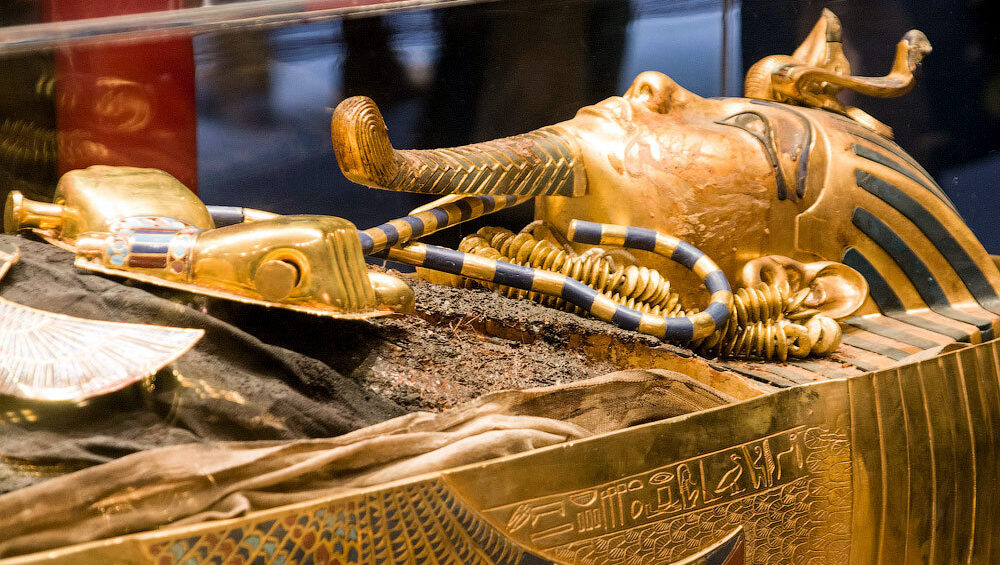
King Tutankhamun tomb (1336–1327 BC) is the only relatively intact royal tomb discovered in the Valley of the Kings and is well-known worldwide. The world’s attention was drawn to Howard Carter’s discovery in 1922 and continued after the tomb’s gold artifacts and other opulent finds were displayed. The discovery of the tombs is regarded as one of the most significant archaeological discoveries ever made. The tombs and the wealth they contain are a symbol of Egypt.

Despite the wealth it held, Tutankhamun’s tomb number 62 in the Valley of the Kings is extremely modest compared to other tombs in size and ornamentation. This is most likely due to the fact that Tutankhamun only held the throne for a total of around nine years after ascending to it at a young age. The much larger graves of kings may make you wonder what treasures they contain. Additionally, Ramesses II was once detained.

The burial chamber’s only decorative surfaces are its walls. Tutankhamun’s tomb has Amduat, unlike other early and late royal tombs, which are lavishly embellished with tomb texts like Amduat and the Book of Gates, which assisted the late king reach the afterlife. There is only one scene shown. The remainder of the tomb’s ornamentation shows Tutankhamun being buried among numerous gods.

The tiny size of Tutankhamun’s Tomb (KV62) has generated a lot of conjecture. High official Ai, his successor, was buried in Tutankhamun’s Tomb after passing away (KV23). The grave of Ai’s successor Haremheb was subject to the same defense (KV57). If so, it’s not known for whom the later Tutankhamun tomb KV62 was carved, but it has been asserted that it already existed, maybe as a private burial or as a storehouse that was later expanded to make place for the king.

Whatever the cause, the tomb was extremely crammed with the roughly 5,000 objects that were discovered within due to its limited size. Tutankhamun would have utilized objects like clothing, jewelry, cosmetics, incense, furniture, chairs, toys, vessels made of diverse materials, chariots, and weaponry daily. These items represent the royal lifestyle.

One of history’s greatest ironies is that Tutankhamun, a very small king who was forgotten due to his relationship with the unpopular King Akhenaten, outranked many of Egypt’s legendary kings.

Abu Haggag Mosque in Luxor

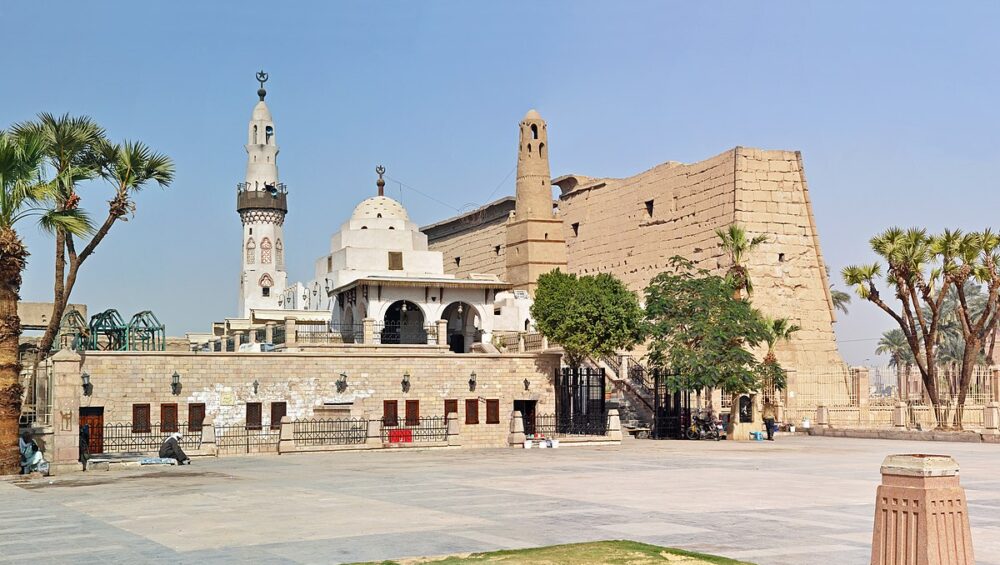
Most Egypt trip packages include a visit to the Abu Haggag Mosque, which is situated in the first courtyard of the ancient Luxor temple complex on the east bank of Luxor. Although there are not many Luxor Temple ruins, there are enough for him to rank among Luxor’s most popular tourist destinations. In essence, everybody who enters the Luxor Temple also enters the Mosque. The good news is that non-Muslim guests are welcome and can freely wander about within.

A trip to the Luxor Temple is made exceptional by the Abu Haggag Mosque, which was built in the 13th century and is still a place of prayer today.

This stunning medieval mosque’s surrounding temple remains are a treat to behold. If you enjoy visiting this sight during the day, come back at night to see it fully lit up as part of the breathtaking narrated sound and light show that is presented there every evening.

The Abu Haggag Mosque’s past

The Luxor Temple, which was also a center of worship, was demolished, but it wasn’t until later that the Abu Haggag Mosque was constructed there. Several churches were erected in the area surrounding the temple before the mosque was added, including one that is still there today.
The fact that worshippers from all religions have gathered here for more than 35 centuries is among this site’s most amazing features.
Some claim that a chief named Youssef, who promoted Islam in the region, was actually the one who erected the mosque. He is also supposed to have spent a lot of time taking care of pilgrims. He later acquired the name Abu Haggag as a result (Father of Pilgrims). The Arabic term for pilgrim is hag. It is quite doubtful that Youssef Abu Haggag actually constructed the temple, despite local folklore to the contrary.

The Abu Haggag Legend

Yusef is thought to have been born in Damascus in the year 1150, relocated to Mecca in his forties, and then ended up in Luxor, Egypt, where he remained until his passing in 1245.

Local lore claims that Abhagag constructed his mosque in the first courtyard of the ancient Luxor temple, but Youssef resisted the officials’ attempts to demolish it.

Officials insisted that the mosque must be demolished despite his best efforts. The cop awoke one morning just before the mosque was destroyed to discover that his body was immobilized. Officials now assume that Abu Haggag’s order to destroy the mosque and their disagreement must have been what caused his abrupt paralysis.

Suddenly, the administrators changed their views and allowed people to leave the mosque where it was originally located. Since that time, Luxor residents have retained a very special place in their hearts for Abu Haggag and the Abu Haggag Mosque.

In Egypt, Abu Haggag and Moorid

Moorid are essentially celebrated as saints’ birthdays. in honour of Muslim and Christian saints. Even if they are not quite usual, these holidays are nevertheless highly well-liked customs. Some of these holidays, like Moulid El Nabi, which honours the Prophet’s birth, are observed all across the nation.

Others, however, are only observed locally, like the Moorid of Abu Haggag, which takes place in Luxor each year in the first few days of November.

The vibrant Abu Haggag’s Moulid lasts for several days. a vibrant and boisterous event. An occasion that fundamentally combines religion and entertainment in a joyful way. Every year, many people look forward to this occasion. Many locals put money aside all year long just to take part in the festivities and the procession through the streets.
It goes without saying that now is the ideal time of year to visit the Abu Haggag Mosque. In Egypt, there aren’t many chances to experience real traditions and customs in such a unique way. These wonderful events do, after all, welcome guests, but they are not intended for tourists.